Thursday, September 30, 2010

iPhone, iPad, or iPod Touch: How Do I Update with an .ipsw File?


Apple frequently releases beta versions of its iOS software through ipsw files. These are the same file format that iTune uses to create backups of your device. If you should find yourself needing to update your device with an ipsw file, this tutorial will walk you through it.


This procedure describes how up update your device with an ipsw file. This process will completely erase your device.

1. Connect your iPhone, iPad, or iPod Touch to your computer via USB.
2. Click on it in iTunes.
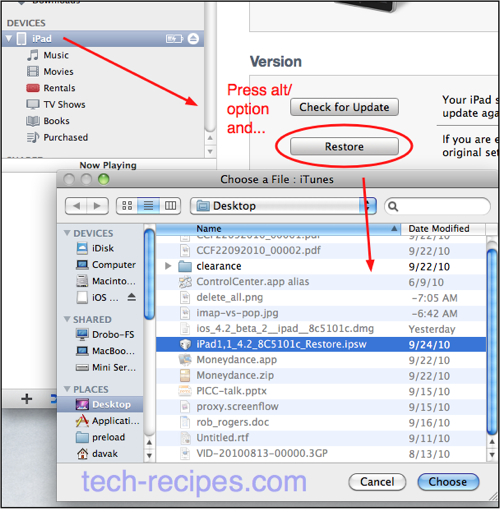
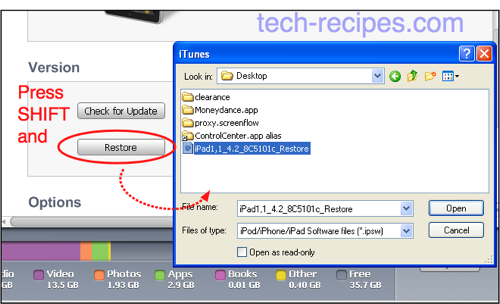
3. On an Apple computer, hold down the “alt option” key and press the Restore button. On a windows computer, hold down the “shift” key and press the Restore button.
4. Browse to your ipsw file and select it when the dialog box appears.
5. Confirm when the warning dialog box appears.

Here is a graphic showing how to update your device with an ipsw file in OS X:

how to update from ipsw file in OS X

Likewise, here is the demonstration on a Windows machine. I’m using XP here:

restore iOS from ipsw in xp

Just because you can upgrade to the latest beta using these methods does not mean that it is a good idea. As an iOS developer, I can tell you that the beta releases typically have serious bugs. Unless you have a really good reason to upgrade early, you should wait until the official release is available.

Read Full Entry

iPhone: How to Bulk Delete Emails

iPhone: How to Bulk Delete Emails
One of the common complaints about the iPhone is the inability to bulk delete email messages. This is a fundamental design decision that Apple has made. Unlike the BlackBerry, the iPhone is simply not designed to remove a large amount of emails at once. If you find yourself trying to bulk remove emails, continue reading for some of my suggestions.


Certainly, the iPhone has the ability to delete email; however, no easy option exists for bulk removal. Apple has decided not to include this as an option within the iPhone operating system at this time. Unfortunately, there is not an easy solution to this problem.

If you are receiving enough email to require bulk deletion, your email workflow is likely very inefficient. Instead of wasting time sorting and deleting all this email, you should invest some time in methods to improve your email management. Here are two different methods I would highly recommend:

How to Bulk Delete Emails

1. Gmail.

By passing your old email through gmail, you can create a powerful method for reducing the amount of unnecessary email that eventually hits your iPhone.

Old Email –> Gmail –> iPhone

Gmail has powerful filtering and spam removal techniques for cleaning up your email. Setup a free gmail account. You can add your existing email account to gmail through Settings -> Accounts and Imports. After you add your old email to gmail, delete your old email account from your phone and add the new gmail account instead. The iPhone automatically configures gmail so setting up gmail on the device is very easy.

Additionally, you can log into gmail in your browser to create filters to automatically sort, process, or delete emails before they hit your iPhone as well. By passing your old email account through gmail, you can drastically reduce the amount of time and energy you spend on email management.

2. IMAP

Most of us are not using just our iPhones for email management. If you also access your email from other devices, then using IMAP will save you a lot of pain. Instead of IMAP, most people use POP technology for email. Through POP all the devices receive all the emails. With POP, deleting a message one device does not remove it from the other.

With IMAP the emails are maintained on the server and each device just access these emails to read or manage. Thus, if one device using IMAP removes an email, that message should be removed from all devices. Therefore, by using IMAP, your iPhone will receive the benefit filtering and spam removal benefits of all your other devices.
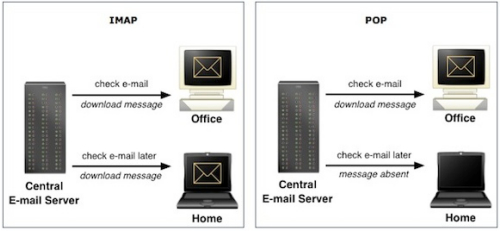
graphic showing imap vs pop
Note: Photo credits and additional information regarding POP versus IMAP.

For example, many people use Microsoft Outlook or Apple Mail. Both of these applications have excellent filtering and spam removal. By using IMAP instead of POP, when an email is removed through Outlook or Mail, it will be deleted from your iPhone as well.

Conclusion:

I certainly see the benefit of being able to bulk select and delete emails on the iPhone. Unfortunately, it is currently not possible. However, if you are manually deleting hundreds of emails a day on your device, then something is fundamentally wrong with your email workflow. By investing a little time in setting up gmail and/or IMAP, you can prevent the bulk of email from ever hitting your device.

Good luck. I look forward to reading your ideas about this…

Read Full Entry

Saturday, September 11, 2010

iPhone iOS 4.1: Send HD Video to YouTube


The cameras of many mobile phones have been able to upload high resolution video to YouTube for a while now. With iOS 4.1 Apple brings the uploading of HD video to YouTube to the iPhone party.

In prior versions of the iPhone OS, users were not able to upload HD video straight to YouTube. With iOS 4.1 uploading high resolution video becomes very simple.


1. Select a video on your device

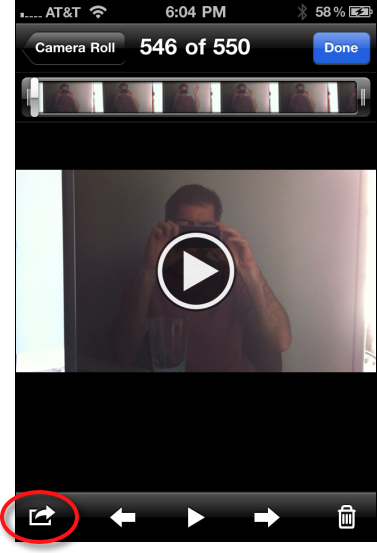
2. Click the Send icon in the lower left hand corner.

click the send icon

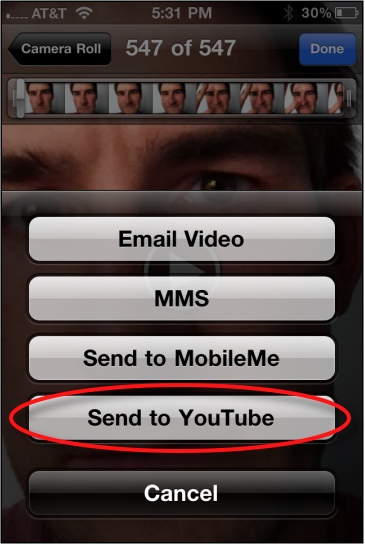
3. Click Send to YouTube button

click send to youtube

4. Fill out your YouTube account information and the various fields that describe your video appropriately. Then select the Publish button.

Read Full Entry

Friday, September 10, 2010

iPhone: Disable Red Squiggle Underlines


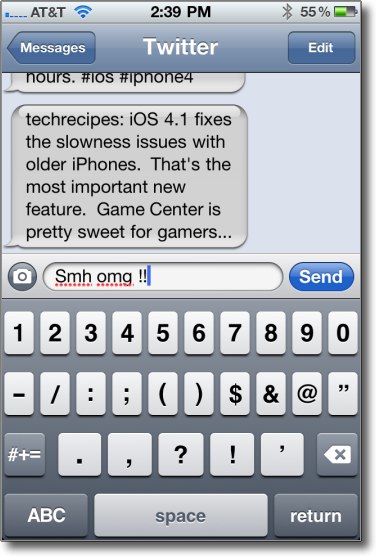
Some of our apple contacts have said that several people have contacted them on how to turn off the red squiggles under misspelled words. As awful as my spelling is, I could not do without this feature; however, if you want to turn off the spelling checks, this tutorial is for you.

Some of our oldest requests were asking how to disable the red squiggle spell checking underlines in Word. I am always surprised how much it bothers some people.


showing red misspelling lines

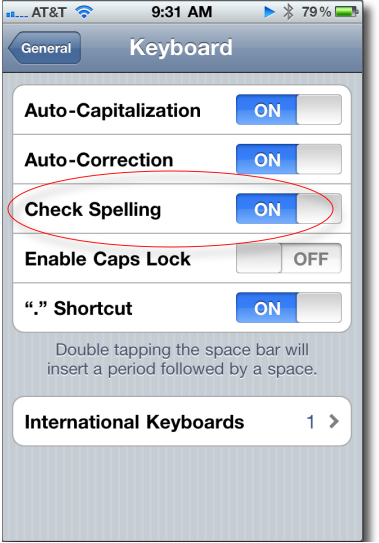
This is how to turn off the spelling checking feature in the iPhone:

1. Click Settings
2. Select General
3. Select Keyboard
4. Slide Check Spelling to OFF

disable spelling checking on iPhone

Read Full Entry

Thursday, September 9, 2010

iPhone iOS 4.1: See Numeric Signal Strength and How to Keep Field Mode Enabled


With the iOS 4.1 Apple has re-enabled field test mode. This allows the user to see the exact cellular signal stretch instead of bars. This tutorial also shows how to trick the iPhone into staying in this mode.

No shocker here. Apple has once again enabled the ability to see the numeric strength of your cellular signal. This is Apple’s way of showing that the majority of call issues are really AT&T’s poor network.

Forget the bar showing signal strength. Now you can actually compare numbers. To enable, dial the following code:


*3001#12345#*

how to enable field test mode

Double tap the signal strength to change from numbers to the graph. Press the home key to exit.

The scale is based on a logarithmic scale so don’t let the negative numbers fool you. Any greater than -100dBm is adequate while -50dBm, for example, is practically perfect coverage. More negative than -110dBm you have a high risk of call failure.

If you want to keep this mode active, you can do the following trick:

1. Dial the code above
2. When the phone enters test mode, hold the OFF button until the screen says Slide to Power Off. Let go of the off button.
3. Hold down the HOME key and keeping holding it while you press cancel. Continue to hold the HOME key until you return to your regular screen.
4. You should be able to use your phone normally while keeping Test Mode enabled.
5. If you want to turn it off, just re input the code and then press the HOME key to disable.

Read Full Entry

iPhone iOS 4.1: Enable HDR Feature in Photos


Many people are excited about the HDR (high dynamic range) feature in the new version of iPhone iOS 4.1. This tech-recipe will show how to turn on and use the HDR setting.

High dynamic range (HDR) photography tries to overcome the exposure limitations of traditional photography. In a scene with bright lights and dark areas, traditional photography cannot simultaneously capture both of these areas correctly. Our eyes may seen the scene well, but the camera cannot capture it.


HDR tries of overcome this limitation but taking shots of different exposures and blending them through software. This software is included in the new iPhone iOS 4.1 software.

To enable HDR mode:

1. Open the Camera app
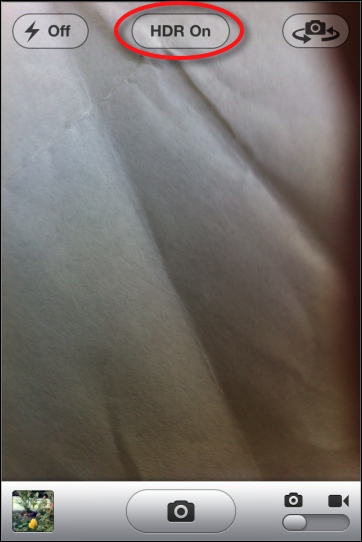
2. Click the HDR toggle at the top of the screen

toggle hdr on

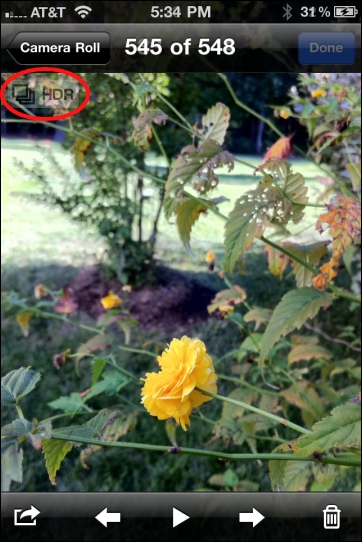
When HDR is toggled, the phone will actually save two pictures to your device–the HDR photo and a traditional photo. You can tell which is which by the HDR label on the photo.

label showing hdr is enabled

Here is a comparison of the standard and HDR versions:

animation of standard and HDR photos

Read Full Entry

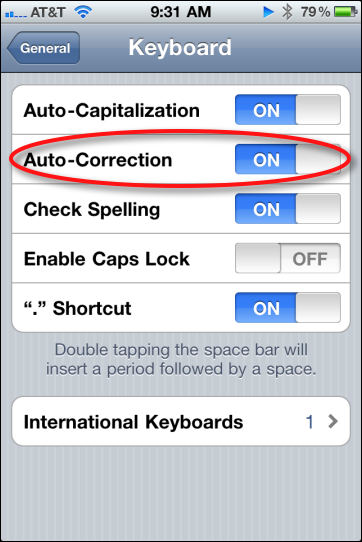
iPhone iOS 4.1: Disable Typing Auto-Correction


You try to text “going to be late, smh” and hit Send. Unfortunately for your relationship, the iPhone corrects “smh” to “Amy.” Oh, boy. When texting, using the iPhone can be annoying as it tries to guess what is being typed. The corrections slow me down more than they help. If you find yourself in this situation, turn off the auto-correction feature. Here is how to do it:


I use a lot of names and abbreviations that the iPhone converts to words that make no sense. With heavy use of texting, I notice this a ton. Turning off the auto-correction can make your life easier.

1. Click Settings
2. Click General
3. Select Keyboard
4. Slide Auto-Correction to OFF

slide auto-correction to OFF

Read Full Entry